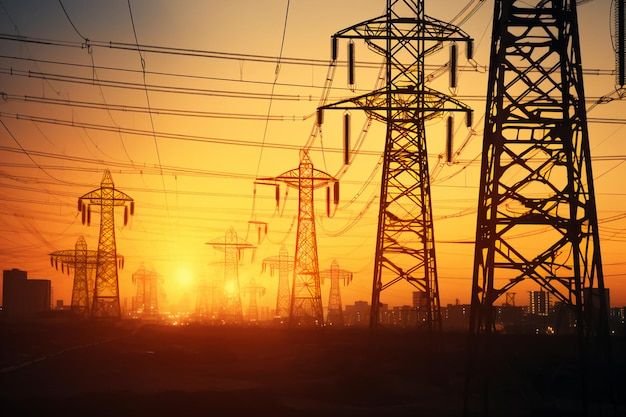
1. Identified Problem Areas
Accra (North Legon, McCarthy Hill): Frequent power outages disrupting households and businesses, with residents reporting up to 4 days of instability .
Tema Industrial Hub: Gas supply shortages at the Tema Power Plant create a 550 MW deficit, affecting industries and urban areas .
Kumasi: Social media reports highlight prolonged outages, impacting commercial activities . Rural Northern Regions: Only 60% electrification rate, with clinics struggling to refrigerate medicines and schools lacking reliable power .
Western Region (Aboadze Thermal Plants): Emissions from fossil-fuel plants cause acid rain, damaging crops and ecosystems .
2. Consequences of Electricity Problems Economic Losses: $680 million annual GDP loss due to outages, with businesses losing 5–31% of sales . Industries like cocoa processing and mining face shutdowns during outages .
Health Risks: Rural clinics cannot store vaccines or power medical equipment, increasing mortality rates by 43% during outages .
Environmental Damage: Reliance on diesel generators and charcoal exacerbates air pollution and deforestation.
Social Inequality: Affluent neighborhoods use backup generators, while low-income areas endure prolonged outages
Education Disruption: Universities and schools struggle with e-learning due to unreliable power.
3. Root Causes of Electricity Challenges
Gas Supply Shortages: Limited gas from Takoradi and unpaid debts to suppliers disrupt thermal plants.Over-Reliance on Thermal Energy: 61% of electricity comes from fossil fuels, vulnerable to fuel price volatility.
Aging Infrastructure: 25% distribution losses from dilapidated grids and electricity theft . Hydropower dams (e.g., Akosombo) are climate-vulnerable, with droughts reducing output.
Financial Mismanagement: $12.5 billion energy sector debt by 2030, driven by costly “take-or-pay” IPP contracts.
Policy Gaps: Slow adoption of renewables (only 0.61% of the energy mix) due to funding and expertise shortages.
4. Cost-Effective Solutions & Implementation Steps
Solution 1:
Diversify Energy Mix with Renewables
– Solar Energy Expansion:
Step 1: Launch tax exemptions and feed-in tariffs for solar projects, targeting 500 MW by 2030.
Step 2: Partner with local firms (e.g., Bui Power Authority) to install solar panels on public buildings and rural clinics.
Step 3: Train 1,000 local technicians via vocational programs (e.g., NVTI) for installation and maintenance .
Solution 2:
Upgrade Grid Infrastructure
– Smart Grid Deployment:
Step 1: Conduct a nationwide grid audit to identify high-loss areas (e.g., Kumasi).
Step 2: Install smart meters and automated systems to reduce theft and technical losses by 15% in 2 years.
Step 3: Secure $200 million for grid modernization.
Solution 3:
Promote Off-Grid Solar Mini-Grids
Rural Electrification:
Step 1: Map 500 off-grid communities in Northern Ghana using GIS technology.
Step 2: Subsidize mini-grid kits (solar + storage) for households, funded by carbon credits.
Step 3: Partner with NGOs (e.g., 350 Ghana) to train local women as solar entrepreneurs.
Solution 4:
Address Financial & Policy Barriers
Debt Restructuring:
Step 1: Audit IPP contracts to renegotiate “take-or-pay” terms, saving $500 million annually.
Step 2: Establish a $300 million Energy Sector Recovery Fund with IMF support to clear arrears.
Policy Alignment:
Step 1: Enforce the Renewable Energy Act (2020) to mandate 10% renewables by 2030.
Step 2: Create a cross-ministerial taskforce (Energy Commission, EPA, Finance) to streamline approvals.
Solution 5:
Community-Based Reforestation
Hydropower Resilience:
Step 1: Mobilize 10,000 volunteers to plant trees in the Volta Basin, improving watershed health .
Step 2: Partner with the Forestry Commission to enforce anti-deforestation laws near dams .
5. Implementation Timeline & Expertise
2025–2026
Solar pilot projects in 50 rural clinics
Bui Power Authority, Ministry of Health
2026–2027
– Smart grid rollout in Accra and Kumasi
– GRIDCo, World Bank
2027–2028
IPP debt renegotiation completed
Energy Commission, IMF
2028–2030
– Achieve 10% renewable energy target
– Renewable Energy Taskforce
By leveraging Ghana’s technical institutes (e.g., KNUST) and international partnerships (e.g., African Development Bank), these solutions can be sustainably implemented with local expertise.
Written by Awaaff
May 2025